Clinical care will most likely undergo a paradigm shift in the coming years. Patients may find themselves facing not a doctor, but a new kind of assistant: an Artificial Intelligence (AI) system.
The implementation of this technology will not only seek to speed up diagnosis, but will also monitor patients’ vital signs in the waiting room itself and carry out diagnostic tests continuously and autonomously.
At the same time, an AI application could be “listening” to the conversation between you and your doctor to detect potential human errors or suggest the next clinical steps.
This vision of AI-assisted healthcare is ceasing to be science fiction and becoming an imminent reality.
A recent study published in the prestigious scientific journal Science reveals that a specific type of AI, the so-called “large-scale language models” (LLM), often outperform flesh-and-blood doctors in diagnosing complex and potentially life-threatening conditions.
AI passes triage test
A research team, including experts from Beth Israel Deaconess Medical Center and Harvard University, tested the diagnostic accuracy of the o1 model developed by OpenAI. To do so, they used real-life cases from emergency room patients.
Emergency rooms are high-stress environments where healthcare professionals must act quickly, often handling several cases simultaneously with highly fragmented information.

Faced with this complex scenario, the results of applying AI were surprising. With the initial information, it managed to identify an accurate or very close diagnosis in approximately 67% of cases, surpassing the 50% to 55% success rate achieved by human physicians.
Even more striking was the performance on the “clinical reasoning” task: the AI scored a perfect 98% in clearly explaining its diagnosis and the steps to follow, compared to a meager 35% achieved by the doctors involved.
Technical limitations: the machine is not infallible
Despite the enthusiasm of experts from institutions such as Google or the Dana-Farber Cancer Institute to see these tools in real-world environments, the system has clear limitations.
Adam Rodman, an internist and co-author of the study, warns that stays in emergency rooms are relatively short.
If AI had to deal with hospitalized patients with medical records that accumulate “days and days of information”, it is very likely that its technical performance would decrease considerably.
Furthermore, in this study the model only analyzed written text, not vital non-textual data such as X-rays or scans, which are essential for diagnosing conditions such as cancer or blood clots.
Other AI tools are already trained in the recognition and interpretation of diagnostic images, so this limitation could be overcome by using them.
Perhaps even more important is a doctor’s ability to interpret signs not recorded in the medical history or diagnostic tests. These would come from personal contact with the patient, listening attentively, or interpreting their attitude, appearance, or expression — something difficult for an AI algorithm to replicate.
Bioethical assessment

Suffering is one of the most complex and difficult realities to define in contemporary medical and bioethical practice.
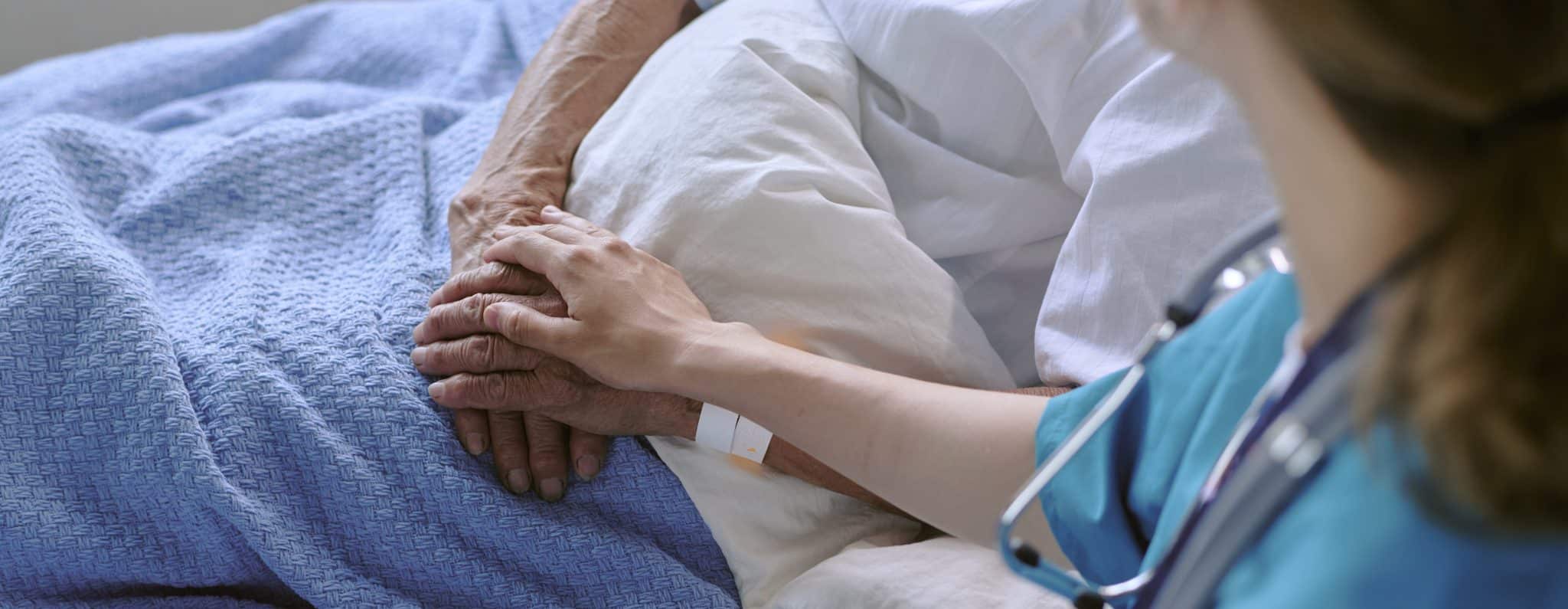
An algorithm can predict the decrease in blood flow to the heart in milliseconds, but it is radically incapable of understanding, measuring, or accompanying the patient’s suffering.
Secondly, delegating diagnosis to technology forces us to reaffirm the irreplaceable value of human care.
As Amparo Aygües points out, “healthcare has a profound ethical component: care ennobles and humanizes both those who receive help and those who provide it.” If we allow AI to interfere and weaken the doctor-patient relationship, we risk losing that connection and our ethical responsibility towards “the Other.”
We can conclude by stating that Artificial Intelligence can be an excellent tool for reducing medical errors and speeding up diagnosis and guidance on therapeutic options, both in emergency medicine and in any other clinical setting.
However, algorithmic precision should always be a complementary tool at the service of the professional and never a moral substitute.
The greatest challenge for medicine in the future will be to incorporate technological innovation without abandoning its primary vocation: the humanizing power of care.
In our opinion, caring consists of listening, empathizing, and intuiting, qualities that, while they can be imitated by AI algorithms, will never be more than an imitation.
Caring involves listening, empathizing, and using intuition. Qualities that, while they can be imitated by AI algorithms, will never be more than an imitation. This imitation is far removed from the authenticity required in human relationships, especially in situations of vulnerability.

Julio Tudela and Cristina Castillo
Bioethics Observatory – Institute of Life Sciences
Catholic University of Valencia