

SPECIAL REPORTS

Two children die after receiving gene therapies in China
Two cases have recently come to light involving the deaths of patients who received gene therapies to treat their diseases. The first case occurred in 2025 and involved a girl who received gene therapy for [...]

Palliative medicine and its ethical commitment to care for people
Palliative Care is the ethical commitment of a society that is sensitive to the suffering of its citizens. When medicine has failed to prevent or cure a disease, the physician must commit to caring for [...]

Mifepristone in emergency contraception: a new threat to the embryo
A recent meta-analysis evaluates the efficacy of low-dose mifepristone as an emergency contraceptive compared to other interventions. Beyond its effectiveness in reducing pregnancy rates, its mechanism of action and ability to interfere with endometrial receptivity [...]

The metaphysics of fine-tuning the universe
Why do the fundamental laws and constants of the universe possess precisely the values that allow for the existence of stars, planets, complex chemistry, and, ultimately, life? The so-called "fine-tuning of the universe" is one [...]

Twenty years of induced pluripotent stem cells: advances, applications, and challenges
Two decades after researcher Shinya Yamanaka’s historic discovery of induced pluripotent stem cells (iPSCs), cellular reprogramming has become one of the greatest revolutions in contemporary biomedicine. By successfully bringing specialized adult cells back to an [...]

Scientists succeed in producing immune cells capable of attacking tumors
A group of scientists from the University of Southern California has developed a method to continuously produce progenitor cells capable of generating macrophages, a type of cell essential for the functioning of the immune system. [...]

The Netherlands records its first child euthanasia case
The Netherlands has recorded its first case of euthanasia performed on a child between the ages of one and twelve since expanding its legislation in 2024. The case, in which neither the child's age nor [...]

Synthetic cells and the creation of life: scientific advances, biological limits, and bioethical challenges
Is it possible to create life in a laboratory? The most recent advances in synthetic biology have made it possible to develop artificial cells with some of the functions typical of living organisms, rekindling the [...]

Base editing. Criticism of its use in embryos to create designer babies
Base editing, a refined form of the widely-known CRISPR-Cas9 technique, allows precise chemical changes to be made in a single DNA letter without cutting the DNA’s double helix. Although this technical innovation broadens the horizon [...]

Relief from suffering: An inalienable right from the beginning of life
Palliative care, which should be used when it is not possible to cure the patient, but it is possible to relieve their suffering and accompany them in the process of their illness in a multidisciplinary [...]

From guide RNA to guide DNA: a new paradigm in CRISPR technology
CRISPR technology, which has traditionally relied on guide RNA molecules to locate specific genetic sequences, may be entering a new era with the development of DNA-guided systems. This paradigm shift promises more stable, precise, and [...]

AI is revolutionizing medical diagnosis as bioethical concerns grow
Clinical care will most likely undergo a paradigm shift in the coming years. Patients may find themselves facing not a doctor, but a new kind of assistant: an Artificial Intelligence (AI) system. The implementation of [...]

Project Hail Mary: the universe without Einstein
Would we have been able to understand the universe today without Albert Einstein's intuition? Inspired by a captivating science fiction premise—an alien civilization capable of interstellar travel yet entirely ignorant of relativity—this article explores Einstein’s [...]

New studies on Down syndrome reopen the bioethical debate on fetal research
Two recent research papers published in Science and PNAS have reignited the debate on Down syndrome, gene editing, and the ethical limits of biomedical research. While one of the studies analyzed the molecular alterations in fetal brain development in [...]

Human genetic enhancement reignites ethical debate in science
The possibility of genetically modifying human beings no longer belongs solely to the realm of science fiction. Rapid advances in gene-editing techniques such as CRISPR have generated intense scientific, ethical, and social debate about the [...]

CRISPR goes one step further: the new technique that can kill diseased cells without editing DNA
CRISPR gene editing has evolved over the past decade from an experimental tool to a therapeutic platform with clinical trials in multiple areas: hematology, oncology, and rare, infectious, and metabolic diseases. In 2025, over 65 clinical [...]

Euthanasia pressure in Canada: The alarming case of a Catholic priest
In Canada, the insistence on promoting euthanasia or “Medical Assistance in Dying” (MAiD) has reached the point of being repeatedly offered to patients who do not suffer from terminal illnesses. A representative example of this [...]

Craig Venter’s legacy: from decoding the genome to creating synthetic life
The recent death of J. Craig Venter prompts a reflection on the legacy of one of the most influential figures in the contemporary genomics revolution. From the intense scientific rivalry that marked the Human Genome Project to the development [...]

Tattoos, lymphoma, and skin cancer: the urgent need for ethical regulation and biosafety guarantees
Tattoos have ceased to be a simple aesthetic expression and have become the object of growing scientific and health concerns. New epidemiological studies link certain inks and their accumulation in the body to an increased [...]
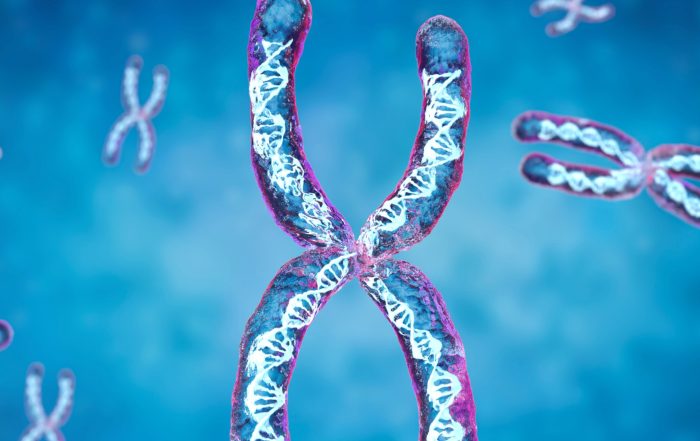
A new breakthrough in chromosome silencing offers a potential treatment pathway for trisomy 21
A recent study published in PNAS presents a breakthrough in Down syndrome research by optimizing a strategy to silence the extra chromosome 21 (primarily responsible for the disorder) through integration of the XIST (X-inactive specific transcript) gene [...]