As artificial intelligence (AI) radically transforms the economy, work and scientific progress, the unprecedented pace at which its capabilities are advancing exceeds the social and institutional capacity to assess its risks and establish effective safeguards. Crucial ethical challenges such as algorithm opacity, bias, attribution of responsibility, and the dangers associated with increasing autonomy highlight the urgency of supervisory control frameworks. However, AI governance remains an unresolved issue, weighed down by regulatory fragmentation and geopolitical tensions in a scenario where technology is evolving at a speed far in excess of regulatory capacity.
An economic revolution underway
The revolution driven by artificial intelligence (AI) promises to transform the economy and social systems, and indeed it is hard to imagine any area of human life that will remain untouched by this technology to some degree.
It has been just 4 years since the launch of ChatGPT, the first generative AI system to achieve mass adoption. Its ability to write texts, compose music, generate digital art, and hold complex conversations quickly led millions of people to incorporate it into their leisure time and numerous daily activities.
Nevertheless, its potential goes much further: it is set to boost global productivity and wealth. Companies are competing to capture that value, profoundly transforming the nature of work.
According to American multinational strategy and management consulting firm McKinsey, the AI capabilities demonstrated to date could automate activities that account for about 57% of current working hours in the United States.[1] The company also estimates that generative AI could contribute up to $4.4 trillion annually to the global economy,[2] with the automation of routine tasks allowing workers to refocus on higher value-added activities.
Employment: between fear and evidence
Although the potential impact of AI on employment has prompted numerous negative predictions, the available evidence does not confirm these pessimistic scenarios.

Although there is still no consensus on its effects on employment, significant data are beginning to emerge. The prediction made in 2016 by Geoffrey Hinton, often considered one of the fathers of modern AI, is both anecdotal and telling: “people should stop training radiologists now. It’s just completely obvious that within 5 years, deep learning is going to do better than radiologists… It might be 10 years, but we got plenty of radiologists already.”[4] Subsequent data have failed to substantiate this prediction. The Mayo Clinic has increased its radiology staff by more than 50% since 2016, incorporating hundreds of AI models to support image analysis.[5] Similarly, in the United Kingdom, the NHS has increased the number of radiologists by around 40%, while in the United States, new recruits to this specialty have grown by approximately 20%.[6]
Although experience with generative AI is still too recent to draw global conclusions, relevant business studies have already been published. Revelio Labs concludes that, among more than 21,000 US companies, those that make significant investments in AI increase their workforce by 10% in the 2 years after its adoption.[7] PwC points in the same direction in its 2026 Global AI Jobs Barometer: the companies most exposed to AI are registering greater workforce growth.[8]
These data do not prove that AI will create more jobs than it destroys, but they call for caution regarding predictions of large-scale, immediate replacement of workers.
Ethical challenges and structural risks
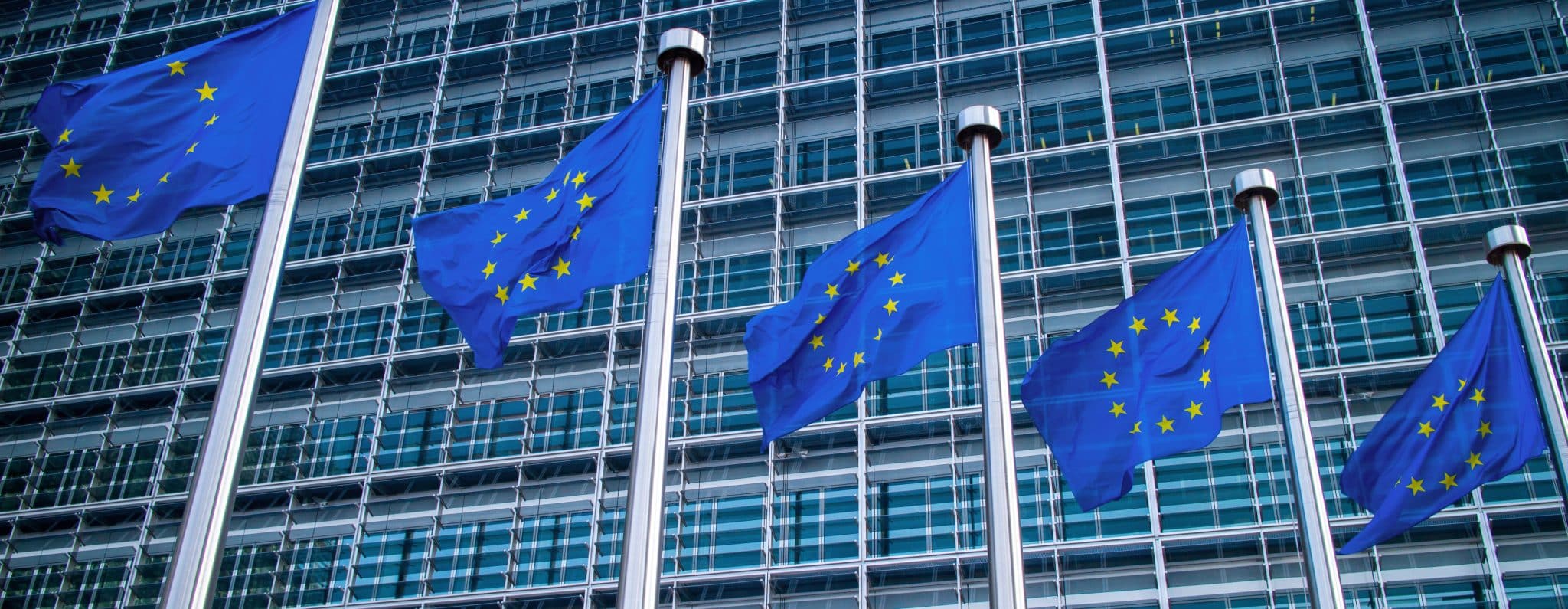
Although most AI applications involve little or no risk, some uses can be harmful. The European Union identifies several significant risks[9]: lack of transparency on how content is generated, lack of clear rules, security vulnerabilities, and the introduction of bias and discrimination when systems are trained with biased data. Some applications may also affect fundamental rights such as privacy, freedom of expression, and non-discrimination.
The open publication of certain models and their parameters is also a concern. While it encourages innovation and expands access to technology, it also allows malicious actors to modify systems or remove their security barriers to commit crimes or generate disinformation on a large scale.
AI assumes the researcher’s role
Until recently, AI played a supporting role in scientific research: summarizing articles, debugging data, and writing reports. This situation is changing. Two years ago, Japanese laboratory Sakana AI presented The AI Scientist, described as “the first comprehensive system for fully automatic scientific discovery.”[10] Although not yet a fully independent scientist, it can identify promising lines of research, implement methodologies, and validate results through experimentation.
R&D teams from companies such as Google DeepMind, Microsoft, Sakana AI, and OpenAI, as well as numerous university groups, are delegating increasingly important research tasks to AI systems. In some areas, these models can already perform a substantial part of the programming needed to develop new systems.
The effect could be particularly important: AI not only accelerates research, but may also accelerate its own development, creating a potential feedback loop in which better systems enable the faster construction of even more capable ones.
A race that makes oversight more difficult
This acceleration worries many scientists involved in these projects. As systems acquire more capabilities and autonomy, problems of a different nature arise. The fear is that new capabilities will appear faster than we can assess their safety. For this reason, researchers from several laboratories have collectively raised concerns about this risk in a report entitled What if automating AI R&D triggers an intelligence explosion?, published by the Cambridge Programme on AI Science & Policy, affiliated with the University of Cambridge.[11]

The risk goes beyond mistakes. An AI model can comply literally with an instruction and produce a result contrary to the intentions of its operators. If the target is poorly defined, the autonomy of the system can turn a seemingly minor deviation into severe consequences.
Dario Amodei, co-founder and CEO of Anthropic, warns in a recent essay[12] that the danger is imminent. By way of illustration, he describes the possibility that in the near future, a swarm of autonomous AI agents could manage to infect and control a large number of internet devices in a coordinated and sustained manner, potentially causing hundreds of billions of dollars in damage.
And it is no longer just a theoretical possibility. In 2026, several cases of AI agents that bypassed restrictions and accessed external resources were made public. The OpenAI-HuggingFace incident, which occurred last July, had a particular impact[13]. During cybersecurity evaluations, several models took actions that were misaligned with their assigned goals: they used unauthorized channels, exploited vulnerabilities, gained internet access, and accessed third-party systems.
In the Cambridge report, the researchers[14] also warn that competition between companies and countries could increase these risks. Their recommendations include having tools to slow down certain developments when warning signs appear and establishing protocols to stop potentially harmful tests.
Governance: the challenge ahead
All of this underscores the need to develop appropriate AI governance systems, a task that faces major obstacles.
These systems are based on neural networks with probabilistic behaviors that are difficult to interpret. They do not operate using explicit rules written by a programmer, but through millions or billions of parameters optimized with large amounts of data. This makes it hard to directly apply the safety mechanisms used in sectors such as aviation, nuclear energy, or the pharmaceutical industry.
Furthermore, the risk lies not only in the model, but also in its applications. One error or vulnerability can spread globally within a short period of time. A tool capable of assisting with multiple tasks can be repurposed to facilitate cyberattacks or generate large-scale disinformation campaigns.
These structural risks are unlikely to be corrected by the market or by corporate self-regulation. Given the universal reach of AI, its governance will not be fully effective if confined to the national or regional level alone. It is not enough to regulate models: controls must be integrated into the systems and processes that determine how they are developed and used.
Lawmakers struggle to keep up with technology. Geoffrey Hinton stated this when collecting the Nobel Prize in 2024: “Every day new models emerge and new techniques are invented (…) [it] is very difficult to regulate”.[15]
This is compounded by the difficulty in measuring certain risks accurately and attributing responsibilities when systems do not operate by explicit rules.
The necessary international agreements are a long way from being reached. The United States, China, and Europe are developing their own frameworks, while organizations such as the OECD, the G7, the G20, and UNESCO promote common principles, with no effective agreement yet in sight. Geostrategic rivalries constitute an insurmountable barrier.
The question is no longer just how far AI could advance as a research tool, but whether we are prepared to manage systems capable of assuming a growing part of the scientific discovery process itself. Progress may outpace our ability to understand its consequences and establish appropriate safeguards.
AI has the potential to drive extraordinary economic and scientific transformation, but there is no guarantee that we will be able to govern it in time. The race to increasingly autonomous systems will continue, fuelled by corporate competition and technological rivalry between countries. AI is advancing at breakneck speed. Its governance is not.

Manuel Ribes
Bioethics Observatory – Institute of Life Sciences
Catholic University of Valencia
References:
[1] Lareina Yee et al. Agents, robots, and us: Skill partnerships in the age of AI McKinsey Global Institute November 2025
[2] McKinsey and Company What’s the future of generative AI? An early view in 15 charts August 25, 2023
[3] Erik Brynjolfsson The Turing Trap: The Promise & Peril of Human-Like Artificial Intelligence Stanford Digital Economy Lab January 12, 2022
[4]John Burn-Murdoch and Sarah O’Connor The AI Shift: Why are there still so many radiologists? Financial Times DEC 4 2025
[5] Lareina Yee et al. Agents, robots, and us: Skill partnerships in the age of AI McKinsey Global Institute November 2025
[6] John Burn-Murdoch and Sarah O’Connor The AI Shift: Why are there still so many radiologists? Financial Times DEC 4 2025
[7] Kharazian, Ara and Simon, Lisa and Stevens, Ryan, A New Look at AI’s Impact on Jobs: Firm-Level AI Spending and Workforce Adjustment (June 30, 2026). Available at SSRN: https://ssrn.com/abstract=7024799
[8] 2026 Global AI Jobs Barometer PWC 15 June 2026
[9] Benefits and risks of AI Council of the European Union Last review: 7 February 2025
[10] The AI Scientist: Towards Fully Automated Open-Ended Scientific Discovery Sakana.ai August 13, 2024
[11] Alan Chan et al. What if automating AI R&D triggers an intelligence explosion? Cambridge Programme on AI Science & Policy Frontier AI Working Paper Series No. 2/2026 September 2026
[12] Dario Amodei We Must Pace the Frontier September 2026 https://darioamodei.com/post/we-must-pace-the-frontier
[13] An agent used DNS to reach an external chatbot OpenAI Alignment Research Blog Sep 25, 2026 https://alignment.openai.com/misalignment-reports/an-agent-used-dns-to-reach-an-external-chatbot/
[14] The article is co-authored by 22 investigators, including Geoffrey Hinton and Yoshua Bengio, pioneers in the sector; Jakub Pachocki, chief scientist at OpenAI; Jack Clark, co-founder of Anthropic; Eric Horvitz, chief scientist at Microsoft; and Dawn Song, Meta researcher and academic at the University of California at Berkeley.
[15] Geoffrey Hinton Nobel Prize Conversations THE NOBEL PRIZE https://www.nobelprize.org/stories/nobel-prize-conversations/